|
Every Saturday and Sunday from 17 September to 29 October, almost all prominent young chess players participated in a tournament held in the Odessa Children's Chess School. The majority of the participants do not have international rating as yet, therefore the tournament results will be calculated for the Ukrainian rating only. Still, the 5th and 6th places of the ELO favourites D.Tobak (2418) and D.Tishyn (2396) make it possible to conclude that the level of this tournament corresponded to the far from lowest FIDE category. The competition was held in commemoration of Vladimir Davydovich Klubis, Honoured Coach of Ukraine (1949-1989).
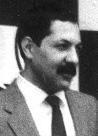
...By the end of the 80s chess remained one of the priority kinds of Soviet sports. Hundreds of people worked with the Association of Odessa Chess Clubs and thousands took an active part in competitions. The unexpected death of Vladimir Klubis was a shock and tragedy for many of these people. Vladimir Davydovich commenced his activity as a coach in 1974 and was awarded with the title «Honoured» by 1985. Among others, his fosterlings were GM Konstantin Lerner, and the future grandmaster Maria Klinova. We may suspend for now the formal listing of Klubis's merits. These main things that I wish to tell you about this man have nothing to do with the philosophy of the sport of highest achievements. I am convinced that chess was neither the goal nor the means for Klubis, but nothing more than one of the sides of life, though one of the important. He was not inventing grand concepts and did not aspire to become the best world coach. His colossal positive energy was able to charge those around with optimism - that was Vladimir Klubis. Being the soul of the party, he could make his listeners double with laughter when telling a story how he had been sent to some mad Soviet military manoeuvres as a reservist (practically, all males of the country were reservists) and had to run away from the shelling of the same kind reservists from the artillery corps (I'm not sure whether there were any chess specialists among them). I am deeply convinced that all good that existed in the Soviet life was due to such individuals as Vladimir Davydovich. And - contrary to the System wherein it was not allowed to make a Xerox copy of chess crosstables without a permission from the security service.
As a leading coach, Vladimir Davydovich trained and accompanied Odessa teams to team championships of Ukraine, mainly of junior rank. Evpatoria-84, Zhitomir-85, Dnepropetrovsk-88, Simferopol-89, to say nothing about training sessions and matches, the Hero Cities' tournaments - plenty of work on end. Odessa junior chess teams were akin as to its spirit to the football team «Chernomorets» of the 80s. One of the assemblies of favourites but almost uncontrollable team of gifted chess players was behind in strength only to one or two teams (Kharkov team included Alterman, Brodsky, Stripunsky, Nedobora, Shmuter - just in one age category!) and yielding in sports' spirit and determination in matches against the «middles». In 1988 we were the first one round before the end and the coaches managed to convince the team to drop cards and other things, and go for a walk, maybe almost holding each other's hands. It does no good to break oneself - the crucial match against Donetsk turned to become a nightmare - the score 1.5 - 4.5 and the total third place were a good enough result. During Simferopol-89 we played unsuccessfully despite our regular win over Kharkov in the last round. They remained the first and we hold the fourth place... In Soviet time such tournaments were much more important than it can be imagined now. Klubis could not take it easy, he suffered immensely but never neither humiliated nor exerted pressure upon us. God knows what it cost to him... Time wipes plenty from the memory but, by some miracle, I preserved notes of the lines that we had analysed together with him in Simferopol-89 when preparing me for one of my games... At that time an experiment was staged in Simferopol: the junior team championships of Ukraine were held one after the other - first girls and then boys. Klubis spent many weeks at both tournaments and, in some time, his heart failed - it happened not the first time but that was the last.
One of the last bright reminiscences of Klubis is linked with his story how he met Velimirovic in Yugoslavia. By the end of the 80s common Soviet chess players have just got an opportunity to cross the Iron Curtain, and such stories sounded like something surrealistic...
By the beginning of the pathological 90s the chess life in Odessa almost ceased. One may discuss it at length whether something could be different if Klubis stayed with us. May be, yes. He could have also emigrated like many others, and probably would have been right. All that is vain - it happened what had to happen. Eleven years have passed. Almost nobody from the participants of the Memorial-2000 could know and remember Klubis. However, it is always possible to find something in their chess life that had been sparked by Klubis in the former Odessa chess players (now they belong not only to Odessa but also to the USA, Israel, Australia, Germany and so on), many years ago... In one of his recent articles (not that one where he argues with Kasparov), Boris Gelfand formulated an utterly simple and wise thought - all sense is in the continuation. There will be a continuation.
V.Klubis Memorial 2000, results:
1. D.Fingerov 2385 10/14, 2. V.Yeremenko 9.5, 3-4. A.Karpovich and I.Butsenko 8.5, 5. D.Tishyn 2396 8, 6. A.Tobak 2418 7.5, 7. A.Adamov 6.5, 8. L.Mokriak 2131 6, 9. S.Shevchenko 2320 5.5, 10. G.Sodol 5, 11-12. A.Garifullin and A.Bogdanov 4.5, 13-14. E.Berdiugina and B.Shablya 3.5.
Download:
the analysis (Simferopol-89) and four Klubis-Kostin 1984 games (zipped cbv)
V.Klubis Chess Memorial 2000 (85 games in zipped pgn)
Links:
V.Klubis Memorial 2000, page in Russian
Great thanks to I.Postol, V.Zaichuk, V.Bogdanov and D.Kostin for the provided materials.
© Chess-Sector.odessa.ua
|